NEPTUNE Canada

print page

Endeavour

Endeavour node plan map
Map of the Endeavour cable, study site, and instrument configurations. (Click to enlarge.)


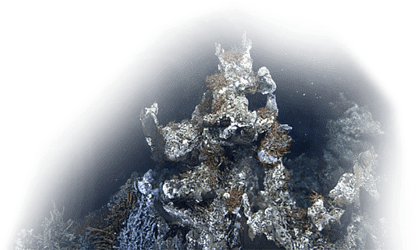
Endeavour Mid-ocean Ridge is an exciting study location because it is a place where new volcanic seafloor is constantly created at the spreading boundary between the Juan de Fuca and Pacific plates. The region (approximately 300 km off the British Columbia coast), has been the site of intensive investigation for more than 20 years.

NEPTUNE Canada's real-time monitoring capability will benefit both ongoing and new experiments. Continuous data gathered before, during and after events like earthquakes and intrusions will be recorded across a coordinated suite of instruments both at the hydrothermal vents on the seafloor and within moorings extending 250m up into the 2,200m water column. A network of seismometers here and at other sites will provide high resolution information on tectonic processes such as earthquakes and strain across the Juan de Fuca plate.

Endeavour Ridge Instruments

Main Endeavour vent field (planned)

  • digital still camera
  • water sampler
  • temperature-resistivity probe
  • tempo-mini, which will integrate the following instruments on a single platform:
    • video camera with LED lights and anti-biofouling devices
    • temperature probes
    • Aanderaa optode oxygen sensor
    • CHEMINI (total Fe) system
  • Cabled Observatory Imaging Sonar System (COVIS)

Mothra hydrothermal vent field (planned)

  • microbial incubator
  • temperature-resistivity probe

Regional circulation moorings (planned)

Four regional circulation moorings will be installed, each including:

  • ADCP (75 kHz)
  • aquadopp current sensor (2 MHz)
  • CTD

A bottom pressure recorder, part of the West Coast "tsunami-meter" experiment, will also be positioned near the southeast regional circulation mooring.

Seismicity study site (planned)

  • broadband seismometer (360s - 50Hz)
  • current meter
  • differential pressure sensor
  • strong motion accelerometer

Seismometer network (planned)

In addition to this seismicity study site, seismometers will be installed across the Endeavour study area:

Short-period seismometer locations
  • main Endeavour vent field
  • midway between the northern pair of regional circulation moorings
Standard seismometer locations
  • Mothra vent field
  • approximately 500m east of the node

Tubeworm Community

Tubeworm community.

Tubeworms unfurl their plumes near a hot vent on Endeavour Ridge. They use their plumes collect oxygen, carbon dioxide and hydrogen sulfide from the water to support chemosynthetic bacteria living in a specialized organ within their bodies. In turn, the bacteria produce organic compounds on which their host worms feed. Complex hemoglobins color the plumes bright red. These hemoglobins can carry sulfides, which are poisonous to most known life forms.

NEPTUNE Canada's cameras and instruments will allow scientists to study these fascinating creatures as never before.

Copyright © 2010 NEPTUNE Canada
P.O. Box 1700 STN CSC, Victoria BC, Canada, V8W 2Y2
1 250 472 5400 | Contact Us
NEPTUNE Canada is a project of