NEPTUNE Canada is designed by scientists for scientists to address some of the key challenges and questions in the oceans. With continuous data, interactive laboratories and remotely operated vehicles (ROVs) positioned in multiple sites spanning a full range of marine environments, the NEPTUNE Canada's unique design will let researchers study processes previously beyond the capabilities of traditional oceanography. Our wide array of instruments will allow direct study of geological, physical, chemical and biological systems in the ocean. Our interdisciplinary approach will enable researchers to answer some of the most complex and pressing questions of ocean and earth science today.
The Juan de Fuca Plate, smallest of Earth's 13 major tectonic plates, is ideally suited for study because of its size and close proximity to Vancouver Island. The NEPTUNE Canada network will span this plate, placing instrumentation at strategic locations on the plate's active edges and relatively stable interior.
NEPTUNE Canada will advance our understanding of climate change by enabling the study of processes involving carbon dioxide and methane cycling in the ocean.
Scientists will be able to monitor physical, chemical and biological interactions involved in primary productivity over a period of decades. This in turn drives bio-chemical cycling through the rest of the food chain.
Population modeling and resource management will benefit from real-time tracking of migration patterns, behaviours and health indicators.
NEPTUNE Canada will enable more accurate assessments of metal deposits, hydrocarbon distributions, and slope stability in our coastal regions.
Long-term, continuous observations will make it possible to capture data for significant episodes as they occur. Resulting research will help scientists improve forecast and warning systems. Examples include:
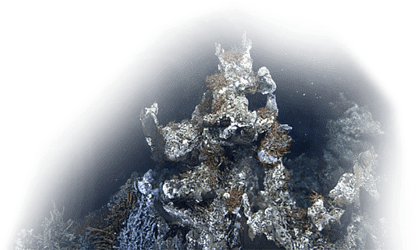
A great diversity of extremophile life-forms are found in harsh deep-sea environments like the super-heated waters surrounding hydrothermal vents and submarine volcanoes. NEPTUNE Canada will help researchers study life's adaptations to extreme and primitive earth habitats.
NEPTUNE Canada's unique system design allows scientist from diverse fields to study the same regions from different viewpoints, combining their results to understand complex multi-faceted processes.